

If you or someone you love has been diagnosed with mesothelioma, you may be wondering how exposure from decades ago could lead to illness today. The mesothelioma latency period explains why symptoms often appear many years after asbestos exposure. Understanding this timeline may help you make sense of your diagnosis and what to consider next.
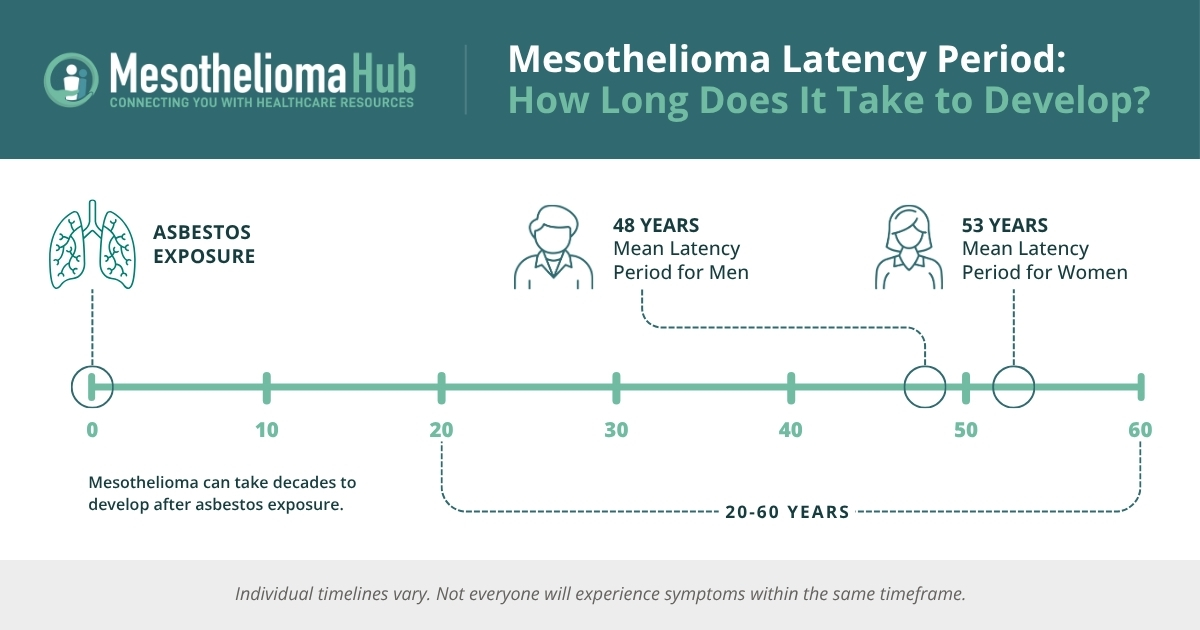
The mesothelioma latency period is the time between when you were exposed to asbestos and when symptoms appear, or a diagnosis is made. For mesothelioma, this period is often much longer than for many other cancers. In most cases, mesothelioma from asbestos exposure develops decades after contact with asbestos fibers. However, your timeline may be different depending on your exposure and personal health factors. This extended latency occurs because asbestos fibers can remain in the body. Over time, these fibers may gradually cause inflammation and damage to surrounding cells, which can eventually lead to cancer.
Several factors may influence the latency period for mesothelioma, including:
These factors help explain why the latency period for mesothelioma may vary from person to person.
When asbestos fibers are inhaled or swallowed, they can travel deep into the body and become lodged in the lining of the lungs, abdomen, or other organs. These fibers are extremely durable, and the body has difficulty breaking them down or removing them. Because they remain in place, they can continue to affect surrounding tissue for many years.
Over time, the trapped fibers may irritate nearby tissue. This ongoing irritation can lead to long-term inflammation, which slowly damages surrounding cells. As this damage continues, changes may occur at a cellular level. In some cases, these changes may eventually lead to abnormal cell growth and the development of cancer.
Due to the gradual process, many people do not notice symptoms until much later, when the disease has already progressed. This slow progression helps explain why mesothelioma and other asbestos-related diseases often have long latency periods.
Your mesothelioma latency period may depend on several different factors. Everyone’s experience is slightly different, and multiple factors may influence how quickly mesothelioma from asbestos develops.
If you were exposed to asbestos repeatedly or over long periods, your latency period may be shorter. This is because higher levels of exposure may increase the amount of asbestos fibers that become trapped in the body. This type of exposure is more common among individuals who worked in construction, shipbuilding, manufacturing, mining, or military settings, where asbestos-containing materials were widely used.
Some asbestos fibers may stay in your body longer than others. Certain types, such as amphibole fibers, are more durable and may contribute to long-term tissue irritation. Because these fibers are more resistant to breakdown, they may remain in the body for extended periods, which can influence how and when mesothelioma develops.
You may have been exposed to asbestos at work, but exposure can also occur at home. For example, family members sometimes experienced secondary exposure when asbestos fibers were brought home on clothing, tools, or equipment. Even lower levels of exposure over time may still increase the risk of asbestos-related diseases, including mesothelioma.
If you were exposed to asbestos at a younger age, you may not develop symptoms until much later in life. This long delay can make it difficult to connect exposure to your current diagnosis. In many cases, individuals may not realize they were exposed until they begin reviewing past jobs, home renovations, or other potential sources.
Your overall health may also influence how mesothelioma develops. Factors such as smoking history, existing lung conditions, and general health may affect how symptoms appear. While smoking does not cause mesothelioma directly, it may contribute to additional respiratory issues, which can sometimes make symptoms more noticeable or complex.
The latency period for mesothelioma may also vary depending on the type of mesothelioma you are diagnosed with.
Pleural mesothelioma is the most common type and has been studied most extensively. Because other forms are rare, research into their latency periods is still evolving.
Mesothelioma is not the only disease linked to asbestos exposure. Other conditions may also develop after an asbestos latency period, though the timelines can vary.
In some cases, these diseases may develop earlier than mesothelioma, while others may appear many years later. Understanding these timelines may help you see how past asbestos exposure can affect your health years later.
Common asbestos-related conditions and their typical latency periods include:
While these conditions differ from mesothelioma, they share a similar characteristic: a long latency period.
In some cases, people may develop more than one asbestos-related condition. For example, someone diagnosed with pleural plaques may later develop additional complications or other asbestos-related diseases. This is why it can be helpful to inform your healthcare provider about any known or suspected exposure, even if it occurred decades ago.
Because the mesothelioma latency period is so long, many people are diagnosed later in the disease’s progression. Symptoms may not appear until decades after exposure, and early signs may be subtle.
You may experience symptoms such as:
These symptoms can sometimes be mistaken for other conditions. If you share your asbestos exposure history with your healthcare provider, it may help guide further evaluation. Even if your exposure happened decades ago, it may still be important to mention.
If you believe you may have been exposed to asbestos, understanding the latency period for asbestos may help you take proactive steps.
You may consider:
Taking these steps may help you feel more informed and prepared.
Receiving a mesothelioma diagnosis can feel overwhelming. You may be trying to process a lot of information at once, while also thinking about treatment options, care decisions, and what this means for you and your family. It’s completely normal to have questions or feel uncertain about what comes next.
Speaking with specialists experienced in mesothelioma may help you better understand your options and develop a care plan that fits your needs. These specialists can explain potential treatments, discuss what to expect, and help you make informed decisions based on your individual situation. Some individuals may also choose to explore financial or legal support related to asbestos exposure, particularly if exposure occurred in the workplace or during military service.
You may also find it helpful to connect with support resources, including patient organizations, educational materials, and caregiver support. These resources can provide guidance, answer common questions, and help you feel less alone as you navigate the next steps.
If you’re looking for more information about the mesothelioma latency period or your options after diagnosis, you may find it helpful to download a free mesothelioma guide or request additional information. Taking small, informed steps at your own pace may help you feel more prepared as you move forward.
Lauren O’Donnell is a content writer who creates clear, informative resources about mesothelioma, lung cancer, and related health topics. She is committed to providing accurate, accessible information that helps patients and their families better understand these complex conditions.
Agency for Toxic Substances and Disease Registry. (n.d.). Asbestos toxicity. https://www.atsdr.cdc.gov/asbestos/
American Cancer Society. (n.d.). Malignant mesothelioma. https://www.cancer.org/cancer/malignant-mesothelioma.html
Centers for Disease Control and Prevention. (n.d.). Asbestos and health effects. https://www.cdc.gov/niosh/topics/asbestos/
National Cancer Institute. (n.d.). Malignant mesothelioma treatment (PDQ®)–Patient version. https://www.cancer.gov/types/mesothelioma/patient/mesothelioma-treatment-pdq