

Vermont ranks 47th out of 50 states for total deaths related to asbestos exposure. Learn more about exposure to asbestos in Vermont, as well as treatment and legal options.
Although Vermont mesothelioma cases are less common than in larger industrial states, the impact on Vermont residents and their families can be just as serious. A mesothelioma diagnosis can bring medical, financial, and legal questions all at once.
This page explains Vermont’s asbestos exposure history, where asbestos risks have been found across the state, and how an experienced Vermont mesothelioma lawyer may help you pursue compensation. If your diagnosis is linked to asbestos companies, asbestos products, or a known exposure site, you may be able to file a mesothelioma claim, mesothelioma lawsuit, or asbestos trust fund claim.
Vermont’s history with asbestos and mesothelioma cases is similar to many states across the country. Asbestos is a cancer-causing substance that was widely used in construction because of its resistance to corrosion, fire, and electricity. Prolonged asbestos exposure has been linked to mesothelioma, a cancer that can affect the lining of the lungs, heart, or abdomen, as well as other asbestos-related diseases.
Vermont’s level of asbestos exposure is influenced by both geographical and industrial factors. The state ranks 47th among U.S. states for asbestos-related deaths, meaning Vermont has a lower overall prevalence of asbestos contamination than many other states. However, historical asbestos sites, older buildings, industrial facilities, and contaminated job sites still matter for Vermont residents who may have been exposed.
Raising awareness and following safety measures can help protect workers, residents, and families from avoidable asbestos exposure in Vermont.
Despite Vermont’s lower ranking, Vermont mesothelioma diagnoses continue to appear decades after the original asbestos exposure. This is because mesothelioma has a long latency period, meaning symptoms may not develop until many years after exposure occurred. Mesothelioma patients in Vermont face many of the same challenges as those in higher-exposure states, including finding specialized mesothelioma treatment, understanding the legal process, and learning whether they have legal rights to mesothelioma compensation.
A qualified Vermont mesothelioma lawyer or mesothelioma attorney can help Vermont residents explore compensation through a mesothelioma lawsuit, asbestos claim, or asbestos trust fund filing.
Asbestos is a group of six naturally occurring minerals, typically found in mines and areas where rock and soil are disturbed, such as construction sites. In addition to its presence in the environment, asbestos was widely used in many industries before it was recognized as a cancer-causing substance.
In Vermont, asbestos exposure risks were highest in occupations tied to the state’s industrial history. This includes workers at the Vermont Asbestos Group mine, employees of the Central Vermont Railway, quarry workers at the Vermont Marble Company, and construction tradespeople who regularly worked with asbestos products. These materials included insulation, pipe covering, and fireproofing products manufactured by asbestos companies, many of which later became bankrupt.
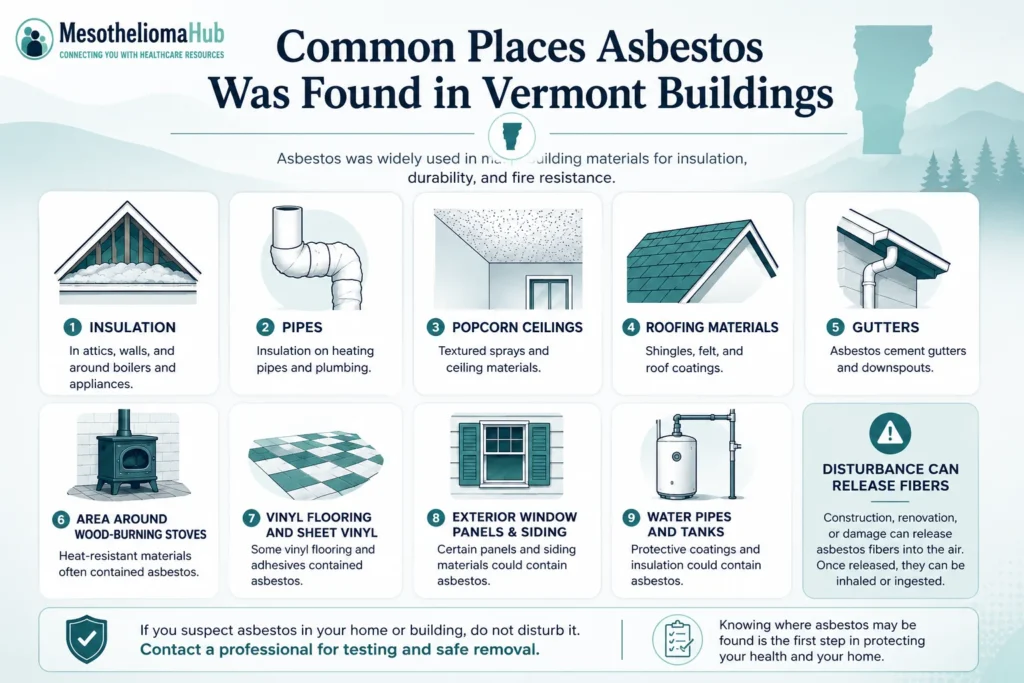
Some common locations where asbestos can be found include:
Asbestos is most harmful when construction, demolition, renovation, or another disturbance causes fibers to become airborne. Once asbestos fibers are released, people nearby may inhale or ingest them without realizing it.
People who work in industrial and environmental occupations where asbestos was frequently present are at higher risk of primary exposure. Their spouses, children, and other household members may also be at risk through secondary exposure, as asbestos fibers can travel home on skin, hair, shoes, and clothing.

Despite being low on the list for asbestos, Vermont has seen a good amount of the mineral for hundreds of years. As early as 1823, it was discovered on Belvidere Mountain in northern Vermont’s Eden/Lowell area. The former Vermont Asbestos Group owned the mine and was one of the world’s largest producers of white asbestos. Mining began in 1902 and continued until 1993 when the mine was shut down. Vermont Asbestos Group employed 320 people in the mine before it was discovered to be toxic to human health.
Even as late as 2018, approximately 30 million tons of asbestos tailings remained in the former mine. One thousand five hundred fifty-five acres of toxins exist at the site from the chrysotile asbestos that naturally occurs at Belvidere Mountain. In August 2017, a plan began to remove the contaminants and ship them to a processing plant in Groveton, New Hampshire.
Workers at the Vermont Asbestos Group mine represent some of the state’s highest-risk asbestos exposure cases. Many former mine employees and their families have pursued mesothelioma lawsuits and asbestos illness claims decades after the mine’s 1993 closure. This shows why asbestos mining exposure documentation can be so important in any Vermont mesothelioma legal case.

Clinton High School was filled with asbestos and has been open since 1921. Since the mineral’s fibers have not been disturbed, there has not been an immediate risk. The community has decided to rebuild the school and move forward with a multi-million dollar renovation.
Generally, buildings built before the 1970s have some asbestos risk, although regulations are now in place for many of these situations. Still, when schools, government buildings, older homes, or commercial properties need to be renovated or repaired after a natural disaster, asbestos fibers may be disturbed and released into the air.
If you worked in construction, renovation, maintenance, or demolition, you may also want to learn more about asbestos in Vermont construction work.
Vermont has implemented regulations designed to address the dangers of asbestos and protect public health. Building owners and managers are responsible for evaluating structures, identifying asbestos-containing materials, and making sure asbestos is removed safely and efficiently when required.
These regulations aim to prevent unknowing and negligent exposure to asbestos, protecting workers and residents across the state. Compliance is important for maintaining safer buildings and reducing the risk of asbestos exposure during construction, renovation, and demolition projects.

The Environmental Protection Agency (EPA) has put multiple air toxin regulations in place for asbestos. These rules aim to reduce the release of asbestos fibers during activities where asbestos is handled.
The most recent national rules are called the National Emission Standards for Hazardous Air Pollutants (NESHAP). These regulations set practices for how asbestos should be handled during demolition, construction, and renovation projects.
These practices include safe asbestos handling procedures, timelines for reporting asbestos-related work, and required paperwork connected to asbestos removal and disposal.
Each state has its own rules for handling asbestos. In Vermont, some requirements include:
The Vermont Department of Labor and Industry enforces these regulations and oversees licensed asbestos abatement contractors. Vermont residents who were unknowingly exposed to asbestos in buildings where these regulations were violated may have grounds for a personal injury lawsuit or mesothelioma claim. This may also apply if asbestos products were negligently used before regulations existed.
Vermont mesothelioma victims and their families may have the right to pursue compensation after an asbestos-related diagnosis. Because these cases often involve exposure that happened decades ago, working with an experienced Vermont mesothelioma lawyer or mesothelioma law firm can help protect your legal rights.
A mesothelioma lawyer can investigate where your asbestos exposure happened, identify the asbestos company or asbestos companies responsible, and help determine whether you may qualify for a lawsuit, trust fund claim, or another form of mesothelioma compensation.
A personal injury lawsuit, sometimes called personal injury litigation, allows a mesothelioma patient to sue the asbestos company or asbestos companies responsible for their asbestos exposure.
Vermont mesothelioma lawyers build these cases by connecting your specific work history and asbestos exposure to named defendants. These may include manufacturers of asbestos products such as insulation, gaskets, pipe coverings, and construction materials.
While every case is different, average mesothelioma settlement amounts are often reported between $1 million and $2.4 million. A mesothelioma verdict at trial may be higher, depending on the evidence, diagnosis, exposure history, and defendants involved.
Vermont personal injury lawyers with asbestos litigation experience understand the state’s tort law framework and can help file your case in the most strategic jurisdiction.
Families of a mesothelioma victim who has passed away may be able to file a wrongful death claim in Vermont. These claims generally must be filed within two years of the date of death.
Wrongful death claims may help recover damages connected to medical expenses, funeral costs, lost income, and loss of companionship. For families managing the aftermath of a mesothelioma diagnosis, this financial support can make a meaningful difference.
A mesothelioma lawyer or mesothelioma attorney at a dedicated mesothelioma law firm can handle filing, documentation, and negotiation on behalf of the family.
Many asbestos companies that operated in Vermont or supplied asbestos products to Vermont job sites later filed for bankruptcy. As part of that process, some established asbestos trust funds to compensate future asbestos victims.
An experienced Vermont mesothelioma lawyer can identify whether your exposure history connects to any asbestos trust fund claims. These claims may be filed alongside a mesothelioma lawsuit to help maximize total mesothelioma compensation.
Asbestos victims do not usually need to go to court to receive trust fund compensation. A mesothelioma claim through a trust is handled administratively by the law firm.
Vermont’s statute of limitations for mesothelioma lawsuits is generally three years from the date of diagnosis or discovery of an asbestos illness. This makes prompt asbestos litigation important after a diagnosis.
Wrongful death claims must generally be filed within two years of death.
If you wait too long, you may risk losing your legal rights to pursue mesothelioma compensation, asbestos claims, or mesothelioma lawsuits in Vermont courts. A Vermont mesothelioma lawyer can assess the applicable deadline for your mesothelioma case during a free consultation.
Vermont mesothelioma lawyers and mesothelioma attorneys at specialized mesothelioma law firms typically work on a contingency fee basis. This means there is no upfront cost to mesothelioma patients or their families.
The law firm usually covers investigation, court filing, and expert witness costs. They only collect a percentage if your case results in a successful mesothelioma settlement or mesothelioma verdict.
Top Vermont mesothelioma lawyers may also have peer recognition, such as Super Lawyer designations or Best Lawyer ratings, which can reflect experience in asbestos litigation and mesothelioma cases.
A managing attorney experienced in Vermont asbestos case histories may be able to travel directly to Vermont residents, so you do not have to visit a law office while managing treatment or family responsibilities.
Many mesothelioma lawyers serving Vermont also handle related asbestos illness diagnoses, including asbestosis and mesothelioma cancer. Some may also help with medical malpractice claims connected to delayed or missed mesothelioma diagnosis.
Learn more about working with a mesothelioma attorney or choosing a mesothelioma law firm.
A Vermont mesothelioma diagnosis requires specialized care from physicians and mesothelioma cancer center teams who understand this rare cancer. Because Vermont has a smaller population, many mesothelioma patients seek care at regional cancer centers in neighboring states.
Connecting with a mesothelioma specialist early can help you understand your options and make informed decisions about care. Mesothelioma treatment may include surgery, chemotherapy, immunotherapy, palliative care, or access to cancer research clinical trials.
Vermont residents may also consider mesothelioma cancer center facilities in nearby northeastern states, including New Jersey, Massachusetts, New York, and New Hampshire. These centers may offer multidisciplinary teams with experience treating pleural mesothelioma, peritoneal mesothelioma, and other asbestos-related cancers.
Medical and legal steps often move alongside each other after diagnosis. A Vermont mesothelioma lawyer may help you understand your legal options while you and your family focus on finding the right treatment support.
Vermont residents who have been exposed to asbestos and later developed asbestos-related conditions may have legal recourse to seek compensation. Given the laws and regulations in place, building owners responsible for asbestos-containing structures can be held accountable for harm caused by unsafe exposure. It is important to consult with a knowledgeable Vermont mesothelioma attorney who can assess your case and guide you through the legal process.
Vermont residents who were exposed to asbestos at the Vermont Asbestos Group mine, aboard Central Vermont Railway lines, at Vermont Marble Company quarry sites, or in any workplace or building where asbestos products were used may have the right to pursue compensation. A Vermont mesothelioma lawyer can evaluate asbestos exposure cases involving asbestos companies that are no longer in business, including claims against asbestos trust fund reserves, at no upfront cost.
Finding a medical cancer treatment center nearby can be helpful for mesothelioma patients who want second opinions or more specialized care. Mesothelioma is rare, and having experienced medical professionals available to answer questions and map out your treatment plan can take pressure off you and your family.
If you receive a positive diagnosis for an asbestos-related condition from a doctor, you can contact the following cancer treatment centers near Vermont.
Mesothelioma patients in Vermont seeking specialized Vermont mesothelioma care may also want to consider mesothelioma cancer center programs in New Jersey and Massachusetts. These locations may be accessible to northern and southern Vermont residents and may offer dedicated mesothelioma multidisciplinary teams.
If you or a loved one in Vermont has been exposed to asbestos and later developed an asbestos-related condition like mesothelioma, it is important to understand your legal rights and options for seeking compensation. Mesothelioma Hub can help connect you with experienced mesothelioma attorneys who specialize in asbestos litigation.
Vermont lawyers can guide you through the legal process, evaluate your potential case, and help you pursue compensation for asbestos-related injuries. Contacting Mesothelioma Hub can help you better understand your legal recourse and access support during a difficult time.
Time is important. Vermont’s statute of limitations means Vermont residents with a mesothelioma diagnosis, or families who have lost a loved one to Vermont mesothelioma, must act within a defined window to preserve their legal rights. A Vermont mesothelioma lawyer who understands personal injury litigation, wrongful death claims, and asbestos litigation can evaluate your mesothelioma case at no charge and outline available paths to mesothelioma compensation.
Do I need a Vermont mesothelioma lawyer specifically, or can any mesothelioma attorney handle my case?
Many national mesothelioma lawyers handle cases across the country. However, a Vermont mesothelioma lawyer familiar with Vermont’s statute of limitations, local asbestos exposure history, and Vermont court procedures may bring important insight to your mesothelioma case. This can be especially helpful if your exposure involved the Vermont Asbestos Group, Central Vermont Railway, Vermont Marble Company, or older Vermont buildings.
What is the statute of limitations for a mesothelioma lawsuit in Vermont?
Vermont generally allows mesothelioma lawsuits and personal injury lawsuits to be filed within three years of a mesothelioma diagnosis or discovery of an asbestos illness. Wrongful death claims generally must be filed within two years of death. A Vermont mesothelioma lawyer can confirm the applicable deadline for your specific mesothelioma case during a free consultation.
Can I file an asbestos trust fund claim if the company no longer exists?
Yes. Many asbestos companies that operated in Vermont or supplied asbestos products to Vermont job sites established asbestos trust fund reserves through bankruptcy proceedings. An experienced mesothelioma lawyer or asbestos lawyer can identify which funds may apply to your asbestos exposure history and file asbestos claims on your behalf, often alongside a mesothelioma lawsuit against solvent defendants.
What compensation can a Vermont mesothelioma attorney help me recover?
A Vermont mesothelioma lawyer can pursue mesothelioma compensation through personal injury litigation, wrongful death claims, asbestos claim filings, and asbestos trust fund distributions. Mesothelioma settlement amounts are often reported between $1 million and $2.4 million, although each case depends on diagnosis, exposure history, and liable companies. Some mesothelioma patients may also be eligible for veterans’ benefits or workers’ compensation.
Vermont residents facing a Vermont mesothelioma diagnosis, or families who have lost a loved one to mesothelioma, deserve experienced legal representation and compassionate support. A Vermont mesothelioma lawyer can evaluate your mesothelioma case, identify possible asbestos exposure sources, and pursue available paths to mesothelioma compensation at no upfront cost.
Request your free case evaluation today or download your free mesothelioma guide.
Jennifer Verta thrives as a digital content writer at Mesothelioma Hub. She has been producing content for clients since before she graduated from the University of Colorado at Denver with a Bachelor of Arts in Communication and a Minor in English Writing. Jen’s mission is to help promote awareness of mesothelioma to as many people as possible by providing only the most up-to-date and accurate content available. When she isn’t cranking the gears at work, Jen can be found snowboarding, hiking, catching live music, or socializing with friends.
Asbestos Nation. (2019). Asbestos-Related Deaths in Vermont. Retrieved on March 9th, 2020, from https://asbestosnation.org/facts/asbestos-deaths/vt/
Blechl, R. (2017). Groveton May Take Lowell Mine’s Asbestos. Retrieved on March 10h, 2020, from https://caledonianrecord.com/news/groveton-may-take-lowell-mine-s-asbestos/article_cdeadfae-6d8a-532d-ace9-015bccde3108.html
EPA. (2019). Overview of the Asbestos National Emission Standards for Hazardous Air Pollutants (NESHAP). Retrieved on March 10h, 2020, from https://epa.gov/asbestos/overview-asbestos-national-emission-standards-hazardous-air-pollutants-neshap
EWG. (2004). Asbestos: Think Again: Deaths Due to Asbestos Related Diseases by State. Retrieved on March 9th, 2020 from https://ewg.org/research/maps/deaths-due-asbestos-related-diseases
FindLaw. (2020). Vermont Asbestos Regulations. Retrieved on March 10th, 2020 from https://statelaws.findlaw.com/vermont-law/vermont-asbestos-regulations.html
KWQC. (2020). Take a Look at Asbestos-Filled Clinton High School Bult in 1921. Retrieved on March 10th, 2020 from https://kwqc.com/video?vid=568517072
National Cancer Institute. Asbestos. (2019). Finding a Cancer Center. Retrieved on March 9th, 2020 from https://cancer.gov/research/nci-role/cancer-centers/find
Grimes, K. (2018). The Country’s Largest Abandoned Asbestos Mine Is Right Here In Vermont. Retrieved on March 9th, 2020 from https://onlyinyourstate.com/vermont/abandoned-asbestos-mine-vt/