

Medically Reviewed by: Dr. Zoe Owrutsky, PhD | March 11th, 2026
The onset and severity of mesothelioma symptoms vary based on the cancer’s location and stage. Recognizing the signs and symptoms of mesothelioma early is important for finding the right diagnosis and initiating treatment as soon as possible.
Mesothelioma can trigger a wide range of physical reactions, known as symptoms, due to the growth of tumors that develop in the lining of the lungs, abdomen, or heart. Since mesothelioma is uncommon and its symptoms can mimic conditions such as respiratory infections, digestive disorders, and heart disease, diagnosis is often delayed. Understanding the possible warning signs can help individuals seek medical evaluation sooner. In this article, we’ll explain the most common symptoms of mesothelioma, how symptoms vary depending on the mesothelioma type, how mesothelioma symptoms can change over time, and when to seek medical evaluation.
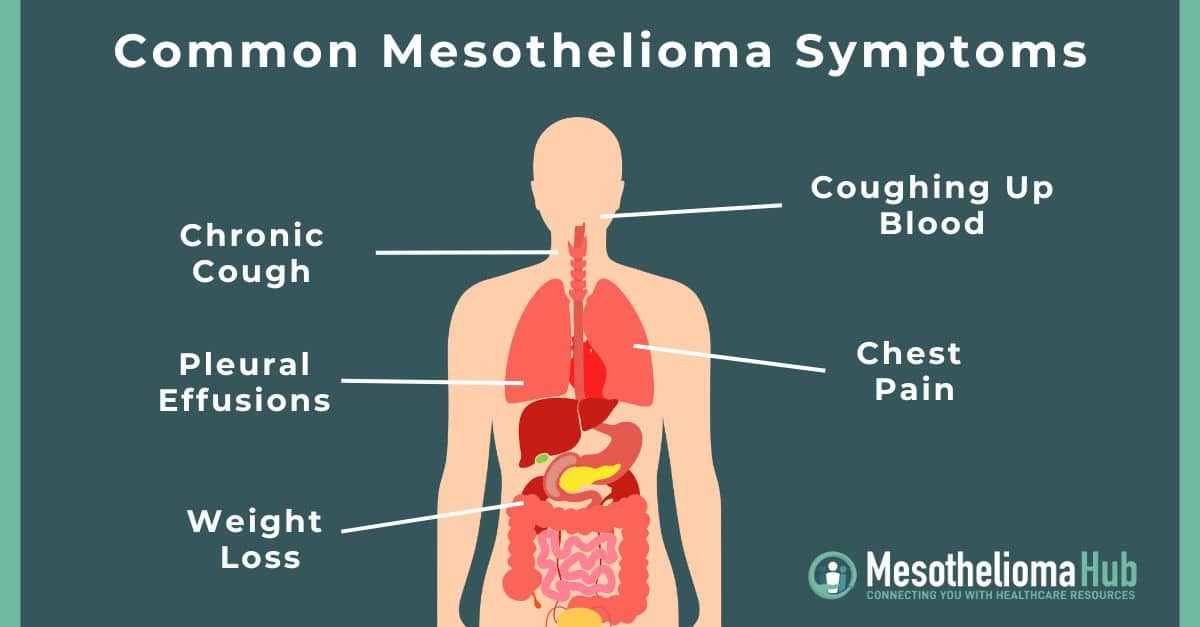
Mesothelioma can cause a wide range of symptoms that vary depending on where the tumors form in the body. Early malignant mesothelioma symptoms may be mild and develop gradually, while more advanced disease may produce more noticeable or severe effects of mesothelioma. Common symptoms of mesothelioma include:
It can take decades for someone who has been exposed to asbestos to develop mesothelioma signs and symptoms. This latency period is the time between a patient’s initial exposure to asbestos and tumor development. The standard latency period is around 33 years, but it can vary a lot from person to person. In some cases, latency periods as long as 50 to 60 years have been reported.
A patient’s disease, stage of illness, age, and overall health can all impact clinical outcomes. Where the tumors are located will also affect a patient’s symptoms. Those with pleural mesothelioma usually notice respiratory-related effects. Peritoneal disease affects the stomach region, and pericardial disease usually causes symptoms around the heart. Besides physical reactions, patients with cancer may also develop disease-related mental and emotional symptoms.
Mesothelioma develops in the protective lining surrounding certain organs, known as the mesothelium. Symptoms often vary depending on where tumors form in the body. The four primary types of mesothelioma include:
Since each type affects a different part of the body, the symptoms a patient experiences may differ significantly.
| Symptom | Pleural (Lung) | Peritoneal (Abdomen) | Pericardial (Heart) | Testicular (Testes) |
|---|---|---|---|---|
| Shortness of breath | X | X | ||
| Chest pain or tightness | X | X | ||
| Persistent dry cough | X | X | ||
| Fatigue or weakness | X | X | X | X |
| Unexplained weight loss | X | X | X | |
| Fluid buildup | X | X | X | X |
| Difficulty breathing when lying down | X | |||
| Fever or night sweats | X | X | X | |
| Loss of appetite | X | X | ||
| Hoarseness or voice changes | X | |||
| Difficulty swallowing | X | |||
| Abdominal pain | X | |||
| Abdominal swelling | X | |||
| Nausea or vomiting | X | |||
| Bowel changes (constipation or diarrhea) | X | |||
| Heart palpitations | X | |||
| Testicular mass or swelling | X |
Pleural mesothelioma is the most common form of the disease, accounting for roughly 80 percent of all cases. It affects the lining of the lungs and chest, called the pleura. As tumors grow, they can irritate the pleural lining or cause fluid to accumulate around the lungs. This buildup, called pleural effusion, can make breathing difficult and contribute to respiratory symptoms. Symptoms of pleural mesothelioma may include:
However, these symptoms can closely resemble other types of respiratory diseases, such as:
Because of this, pleural mesothelioma is sometimes misdiagnosed at first as a more common lung condition. Symptoms may gradually worsen as tumors grow or fluid continues to accumulate in the chest cavity.
Peritoneal mesothelioma develops in the peritoneum, the thin membrane that lines the abdominal cavity and surrounds many internal organs. It is the second most common type of the disease.
Tumor growth within the abdomen can cause irritation, inflammation, and fluid buildup known as ascites. Ascites may place pressure on nearby organs, leading to digestive symptoms. Common peritoneal mesothelioma symptoms include:
These abdominal mesothelioma symptoms may resemble other digestive disorders, such as:
Because these symptoms can mimic many other gastrointestinal conditions, further testing is usually required to determine the true underlying cause.
Pericardial mesothelioma forms in the pericardium, which is the protective membrane surrounding the heart. This type of mesothelioma is extremely rare, with as few as 100 cases reported every 20 years.
Tumors or fluid accumulation around the heart can interfere with its normal function, which may lead to symptoms affecting both the cardiovascular and respiratory symptoms. Pericardial mesothelioma symptoms may include:
These heart-related symptoms may also be mistaken for more common cardiovascular conditions, such as:
Testicular mesothelioma is the rarest form of the disease, making up less than 1 percent of all mesothelioma diagnoses. This type develops in the lining surrounding the testes, known as the tunica vaginalis. Because this form is so rare, research on its progression and symptoms is limited. However, several symptoms have been reported in documented cases. These include:
These symptoms may resemble other conditions affecting the reproductive system, such as testicular tumors or hydroceles (painless, fluid-filled sacs surrounding the testicle). A medical evaluation is needed to rule out other conditions.
Doctors use a staging system to describe how certain types of cancer, including mesothelioma, have progressed in the body. Pleural mesothelioma, the most common form, is the only type with a formal staging system. The system classified the cancer into four stages (1 to 4) based on tumor size, location, lymph node involvement, and whether the cancer has spread to other tissues or organs. As mesothelioma progresses, tumors typically grow larger and may spread to nearby tissues or lymph nodes.
In the early stages of mesothelioma, which include stages 1 and 2, tumors are usually localized to the area where they first developed, and symptoms may be mild or subtle at first.
In stage 1 mesothelioma, the tumor is usually confined to the mesothelial lining where the cancer first formed, such as the pleura surrounding the lungs. Early mesothelioma symptoms of stage 1 may include:
In stage 2 mesothelioma, the cancer is considered locally advanced, meaning that it may spread into nearby tissues like the diaphragm or local lymph nodes, while still remaining on one side of the chest. Stage 1 symptoms may become more noticeable, and additional symptoms may develop as tumors grow or fluid begins to accumulate around affected organs. Additional stage 2 symptoms may include:
These symptoms may be mistaken for common illnesses such as respiratory infections or digestive issues. However, early-stage mesothelioma is typically more responsive to treatment, so early medical evaluation is critical.
In later stages, mesothelioma may spread beyond its original location into nearby tissues or distant parts of the body. Stage 3 mesothelioma is considered regionally advanced, which means that tumors may involve nearby structures within the chest or abdomen. By stage 4 of mesothelioma, the disease may metastasize (spread) to distant organs, such as the liver, bones, or brain. As the cancer progresses, symptoms often become more severe. Late-stage mesothelioma symptoms may include:
At this stage, symptoms may interfere with daily activities and require ongoing medical care. While treatment options may be more limited in advanced stages, therapies can still help slow disease progression and improve comfort. Many care plans focus on symptom relief, supporting care, complementary therapies, and maintaining quality of life.
Many symptoms linked to mesothelioma, such as shortness of breath, persistent cough, chest pain, or abdominal swelling, can also be attributed to more common illnesses. However, individuals who also have a history of asbestos exposure should consider seeking medical evaluation if these symptoms appear or continue to worsen over time. Even mild or gradually developing symptoms should be discussed with a healthcare provider or mesothelioma doctor, especially if they persist for weeks or months.
Since mesothelioma can take decades to develop after asbestos exposure, people may not immediately connect their symptoms to past work environments or environmental exposure. However, when inhaled or swallowed, asbestos fibers can become lodged in the tissues lining the chest cavity, where they may cause long-term scarring, irritation, and inflammation that eventually leads to tumor development.
It’s important to share a detailed occupational and environmental history with your doctor, as this can help guide further testing and prevent misdiagnosis with conditions such as pneumonia or bronchitis.
Doctors may also recommend evaluation or screening for individuals in higher-risk groups, including:
Prompt medical evaluation can help identify the cause of symptoms and, when necessary, allow treatment to begin earlier.
To diagnose mesothelioma, doctors usually begin by reviewing a patient’s medical history, including potential asbestos exposure, and performing a physical examination to assess symptoms such as breathing difficulty, chest pain, or abdominal swelling.
If mesothelioma is suspected, your doctor may order imaging tests to look for abnormalities or fluid buildup around affected organs. Common imaging tests include:
If fluid has accumulated around the lungs, heart, or abdomen, doctors may remove a fluid sample through a procedure paracentesis. The fluid can then be analyzed for cancer cells.
A biopsy is required to confirm mesothelioma. This is a procedure that involves surgically removing a small tissue sample from the affected area and examining it under a microscope by a pathologist. This analysis helps mesothelioma specialists and doctors not only confirm the diagnosis but also determine the specific type.
Treatment for mesothelioma often focuses on controlling tumor growth while also relieving symptoms that affect breathing, digestion, and overall comfort. A patient’s individual treatment plan usually depends on the type of mesothelioma, stage of the disease, and overall health. In the earlier stages, doctors may recommend therapies intended to remove or shrink tumors. In advanced stages, treatment may prioritize symptom management and quality of life.
Common treatment options to manage symptoms of mesothelioma cancer include:
In addition to medical treatments, supportive therapies can help patients maintain comfort and daily functioning during treatment. These may include:
Together, these treatments and supportive therapies can help patients manage symptoms and maintain quality of life while living with mesothelioma, while also addressing the underlying disease and its causes — most commonly asbestos exposure.
The primary cause of mesothelioma is exposure to asbestos, a naturally occurring mineral that was widely used in construction, insulation, automotive parts, and many products through the 20th century. When disturbed, microscopic asbestos fibers and particles become airborne and can be inhaled or swallowed accidentally. Over time, these fibers may become trapped in the lining of the lungs, abdomen, heart, or testes, where they can cause inflammation and cellular damage that eventually leads to asbestosis or mesothelioma.
Several types of exposure can increase the risk of developing mesothelioma, including:
While asbestos is the main cause, other mesothelioma risk factors, such as age, sex, genetics, and the length and intensity of exposure, may influence a person’s overall risk.
If you are reading through these questions, you may already be feeling overwhelmed or uncertain about what your cancer asbestos symptoms could mean. Many people who eventually learn they were exposed to asbestos experience this same confusion at first, especially because mesothelioma symptoms can resemble more common health conditions. Understanding the signs and knowing when to speak with a doctor can help you take the next step with more confidence. Our goal is to provide clear, reliable information so you and your loved ones feel supported as you navigate these concerns.
Early symptoms often include mild shortness of breath, fatigue, chest discomfort, or abdominal swelling. Because these symptoms are common in many other conditions, they may not necessarily point to mesothelioma.
Mesothelioma can take 20 to 50 years to develop, and most people are diagnosed between the ages of 50 and 65. However, the latency period can be shorter or longer depending on individual risk factors.
Symptoms usually develop gradually. However, once tumors grow larger or fluid begins to accumulate around organs, symptoms may worsen more quickly.
Yes, shortness of breath is one of the most common symptoms, especially in pleural mesothelioma.
It’s difficult to identify mesothelioma based on symptoms alone because early signs, such as shortness of breath, chest pain, or fatigue, can resemble other conditions. A confirmed diagnosis requires medical testing, including imaging scans and often a biopsy. If you have a history of asbestos exposure and are experiencing persistent symptoms, it’s important to speak with a doctor for proper evaluation.
Mesothelioma early detection can be difficult because asbestos cancer symptoms often resemble other illnesses. However, individuals with known asbestos exposure who experience persistent symptoms should seek medical evaluation to rule out other potential asbestos cancers and asbestos-related diseases.
If you are experiencing persistent symptoms such as shortness of breath, chest pain, or unexplained fatigue, especially if you have a history of asbestos exposure, it is important to speak with a doctor as soon as possible. A medical professional can evaluate your symptoms, order appropriate tests, and help determine whether further screening for mesothelioma or other asbestos-related diseases is needed.
For many families, receiving a diagnosis can feel overwhelming, but you are not without options. Individuals diagnosed with mesothelioma may be eligible for compensation that can help cover medical treatment, travel for specialized care, lost wages, and other expenses related to the illness. Learning about your medical and legal options can help you make informed decisions about the next steps for yourself or a loved one.
To learn more about mesothelioma, treatment options, and the resources available to you, download our free guide or schedule a confidential case evaluation with our team today. Access to the right information and support can make an important difference as you move forward.

Zoe earned her Bachelor of Science from the University of Pittsburgh in 2014 and her Ph.D. in neuroscience from the University of Colorado Anschutz Medical Campus in 2023. As a neuroscience researcher, she studied the pathophysiology of depression and schizophrenia and worked toward developing translational biomarkers for spatial hearing ability. She is passionate about mental health advocacy and science communication.